01Overview
A type-based study adopted fuscofulva for the fungus often called atrobrunnea. The extracted 2022 assay reports non-detection, not zero concentrations. [borovicka-2015-atrobrunnea] [gotvaldova-2022]
This is a scientific reference record, not field-identification guidance.
02Nomenclature
- Accepted name
- Psilocybe fuscofulva
- Authority
- Peck
- Family
- Agrocybaceae
- Publication year
- 1887
- Basionym
- Not yet researched — verification required
- Taxonomic status
- accepted
- MycoBank identifier
- Not yet researched — verification required
- Index Fungorum identifier
- 222041
Synonyms (0 recorded names)
No verified synonyms entered. This does not indicate that synonyms do not exist.
Nomenclatural sources: [index-fungorum-222041-2026] [niskanen-2026] [borovicka-2015-atrobrunnea]
Research completeness
- taxonomy
- Human reviewed — J Dale, 2026-09-29
Current name and primary treatment checked. Original protologues and exhaustive synonymy remain pending. Any historical name conflict is explicitly resolved within the account’s scope.
- overview
- preliminary
Selected source passages checked; comprehensive synthesis remains pending.
- description
- not researched
Research remains incomplete; no absence or conservation category inferred.
- ecology
- preliminary
Selected source passages checked; comprehensive synthesis remains pending.
- distribution
- preliminary
Selected source passages checked; comprehensive synthesis remains pending.
- chemistry
- preliminary
Table 1, methods and supplement checked. Source disagreements are preserved in evidence conflicts; no species mean, extrapolation or inferred zero is supplied.
- molecular
- preliminary
Selected source passages checked; comprehensive synthesis remains pending.
- history
- preliminary
Selected source passages checked; comprehensive synthesis remains pending.
- conservation
- not researched
Research remains incomplete; no absence or conservation category inferred.
03Taxonomic description
Taxonomic description. These characters are presented for scientific reference and are not intended as field-identification guidance.
Macroscopic characters
This section has not yet been researched for this account.
Microscopic characters
This section has not yet been researched for this account.
04Distribution and ecology
The 2022 assay supplement lists three Czech collections. This is analytical provenance rather than a full distribution assessment. [gotvaldova-2022]
- Known range
- Described from an area now spanning eastern Germany and western Poland, with collections reported from other European countries, Canada and the USA
- Countries with documented material
- Germany, Poland, Canada, United States
- Habitats
- Peat bogs, Peaty habitats
- Substrates
- Sphagnum, Moist decaying wood
- Ecological associations
- Sphagnum
- Seasonality
- Not yet researched
Ecological context
The name record associates the original New York material with soil and Sphagnum. A complete ecological account remains pending. [index-fungorum-222041-2026]
Occurrence records
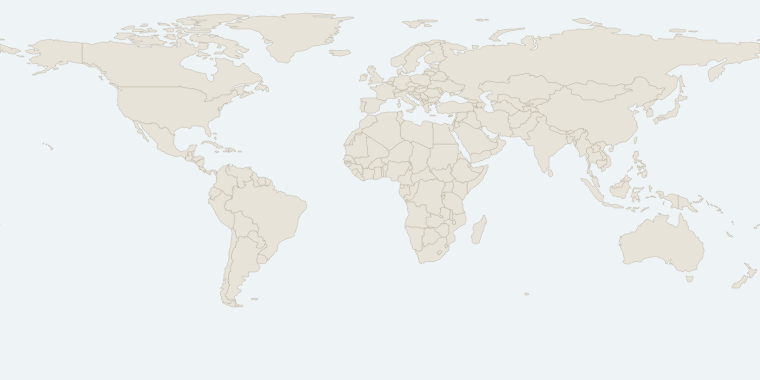
Recorded observations are not equivalent to true biological range. Absence of records does not demonstrate absence of a species.
Occurrence provenance & map methods
- Licence / retrieval date
- CC BY-NC 4.0 / 2026-09-15
- Coordinate uncertainty
- Reported for 77 of 122 plotted records. Median 250 m; 26 records at 30 m or finer; coarsest 41 km. Points are plotted at source precision, so precision varies by orders of magnitude within this map.
- Sensitive records
- unreviewed
- Countries with georeferenced records
- US (49) · RU (28) · DK (14) · CA (13) · SE (6) · AT (3) · DE (3) · GB (2) · BY (1) · CH (1) · FI (1) · PL (1)
Points are plotted at source precision on an equirectangular projection. Two records falling on the same rendered pixel appear as one mark; the downloadable dataset is not reduced. Records published under names this reference has not reconciled, including synonyms, infraspecific taxa and sequence clusters, are excluded rather than reassigned.
05Chemistry
Measurements belong to studies, specimens and methods. A single concentration cannot stand in for a species.
| Study / year | Material | Method | Record |
|---|---|---|---|
| Extensive Collection of Psychotropic Mushrooms with Determination of Their Tryptamine Alkaloids / 2022 | Dried fruiting bodies | UHPLC–MS/MS (triple quadrupole; positive electrospray; dynamic multiple reaction monitoring) | Details ↓ |
gotvaldova-2022-fuscofulva-table-1 — specimen, methods & measurements
- Source location
- Table 1, Psilocybe fuscofulva row; sections 2.2 and 3.2–3.4; Supplementary Table S1
- Verification
- Source checked; see evidence trail
- Measurement basis
- dry mass
- Specimen
- Whole fruiting bodies (cap and stipe) identified as Psilocybe fuscofulva in the source.
- Material
- Dried fruiting bodies
- Sample size
- 6
- Sample counting basis
- 6 fruiting bodies (fb), from 3 collections (n), as printed in Table 1.
- Provenance
- Collection-level origins retained below.
- Analytical method
- UHPLC–MS/MS (triple quadrupole; positive electrospray; dynamic multiple reaction monitoring)
- Preparation
- Dried, homogenized fruiting bodies; acidified methanol extraction and re-extraction (section 3.3).
- Storage
- Dried material kept in darkness at 20 °C (section 3.2). Collection and analysis dates are retained below; exact storage durations are not inferred.
- psilocybin
- not detected — Below detection limit in tested material; not zero or species-wide absence.
- psilocin
- not detected — Below detection limit in tested material; not zero or species-wide absence.
- baeocystin
- not detected — Below detection limit in tested material; not zero or species-wide absence.
- norbaeocystin
- not detected — Below detection limit in tested material; not zero or species-wide absence.
- aeruginascin
- not detected — Below detection limit in tested material; not zero or species-wide absence.
Collections in the source
Dates retain the precision reported by the study. These collections underlie the aggregate ranges; individual concentrations have not been inferred.
PS-46 · Czech Republic
- Collected
- 19.9.2017
- Analysed
- April 2018
- Voucher
- PRM 945880
- GenBank accession
- Not provided in the source table
GenBank column is n.a.; absent voucher remains null.
PS-47 · Czech Republic
- Collected
- 20.9.2017
- Analysed
- April 2018
- Voucher
- PRM 945859
- GenBank accession
- Not provided in the source table
GenBank column is n.a.; absent voucher remains null.
PS-60 · Czech Republic
- Collected
- 26.09.2018
- Analysed
- April 2019
- Voucher
- PRM 951350
- GenBank accession
- Not provided in the source table
GenBank column is n.a.; absent voucher remains null.
Aggregate dry-mass results from one study, not expected species concentrations. No individual measurements are inferred from ranges.
Read source recordModern quantitative assays
The extracted study used UHPLC–MS/MS on dried material. Preparation, storage and measurement basis accompany the row. [gotvaldova-2022]
Evidence assessment
The 2022 table reports all five monitored compounds below detection limits in six fruiting bodies from three collections. These are non-detections in tested material, not zero values or proof about every specimen. [gotvaldova-2022]
Assessments depend on material, preparation, storage, sampling and analytical methods. Measurements are literature records, not predictions of effects.
How chemistry records are structured ↗06Molecular evidence
The 2015 study places the sampled fungus in Psilocybe despite negative chemical tests. Genus placement does not establish compound presence. [borovicka-2015-atrobrunnea]
07History
Peck published fuscofulva in 1887. The later revision adopted it after examining its holotype; atrobrunnea in earlier authors’ sense is not treated here as an unqualified synonym. [index-fungorum-222041-2026] [borovicka-2015-atrobrunnea]
A place for the historical record
This account records the nomenclatural history checked so far. Broader historical research remains pending; interpretations must stay connected to their documentary sources.
08Conservation
Conservation assessments have not yet been researched for this account.
- Assessment status
- Not yet researched
- Assessment authority / year
- Not verified / Not verified
Not researched by Psilocybia, not assessed by a conservation authority, and Least Concern are different states. None should be inferred from another.
09Images & specimens
Space is reserved for field photographs, herbarium specimens, microscopy and historical plates, with source and licence metadata.
Photographs are not presented as sufficient for mushroom identification.
10References
- J. Borovička; M. Oborník; J. Stříbrný; M. E. Noordeloos; L. A. Parra Sánchez; M. Gryndler (2015). Phylogenetic and chemical studies in the potential psychotropic species complex of Psilocybe atrobrunnea with taxonomic and nomenclatural notes. Persoonia 34, 1–9. DOI: 10.3767/003158515X685283 Source record ↗
Source class: primary.
Source verification history
- metadata: verified · 2026-09-12 · Psilocybia editorial. Verification source
Authors, title, volume and pages match full-text XML. Issue dated June 2015; electronic publication 21 October 2014.
- doi: verified · 2026-09-12 · Psilocybia editorial. Verification source
DOI agrees with the full article XML.
- content: verified · 2026-09-12 · Psilocybia editorial. Verification source
Read nomenclatural discussion, medullosa/silvatica comparison, Tables 1–3 and chemical results. The 2015 study did not quantify PS/PSB. No cultivation protocol extracted.
- metadata: verified · 2026-09-12 · Psilocybia editorial. Verification source
- GBIF Secretariat (2026). Psilocybe fuscofulva — GBIF Backbone Taxonomy record 5459397; accessed 29 September 2026. . Source record ↗
Source class: taxonomic database.
Source verification history
- metadata: verified · 2026-09-29 · Psilocybia editorial. Verification source
Backbone name record retrieved and confirmed by two independent routes: the strict name-match endpoint returned usageKey 5459397 as an EXACT, ACCEPTED species match, and the record endpoint was then fetched directly and agreed on name, rank and acceptance. The record places Psilocybe in Hymenogastraceae; that placement is not adopted here.
- content: verified · 2026-09-29 · Psilocybia editorial. Verification source
Backbone name record retrieved and confirmed by two independent routes: the strict name-match endpoint returned usageKey 5459397 as an EXACT, ACCEPTED species match, and the record endpoint was then fetched directly and agreed on name, rank and acceptance. The record places Psilocybe in Hymenogastraceae; that placement is not adopted here.
- metadata: verified · 2026-09-29 · Psilocybia editorial. Verification source
- GBIF.org (2026). GBIF Occurrence Download: georeferenced records for Psilocybe taxa (download 0000371-260915150036944). . DOI: 10.15468/dl.dhgzxa Source record ↗
Source class: primary.
Source verification history
- metadata: verified · 2026-09-29 · Psilocybia editorial. Verification source
Download record retrieved from the GBIF API. Key 0000371-260915150036944, DOI 10.15468/dl.dhgzxa, status SUCCEEDED, created 2026-09-15, 31,439 records drawn from 294 datasets, SIMPLE_CSV format, licence http://creativecommons.org/licenses/by-nc/4.0/legalcode. The DOI and the record count were confirmed against the archive held locally rather than assumed from the filename.
- doi: verified · 2026-09-29 · Psilocybia editorial. Verification source
DOI read from the download record returned by the GBIF API and matched to the download key of the archive used to generate the occurrence maps.
- content: verified · 2026-09-29 · Psilocybia editorial. Verification source
The archive was read row by row to generate the published maps and the per-country counts. 31,208 rows carry usable coordinates and a taxonKey this reference maps to one of its own records; 231 rows fall under synonyms, infraspecific taxa or sequence clusters and are excluded rather than reassigned. Coordinate uncertainty is reported for about 90 per cent of rows, with a median near 7 km and a coarsest value above 5,000 km, so individual points vary enormously in precision. 25 per cent of the country entries derived from this download rest on a single record, and the majority of records are human observations rather than preserved specimens; counts are therefore published alongside every country.
- metadata: verified · 2026-09-29 · Psilocybia editorial. Verification source
- Klára Gotvaldová; Jan Borovička; Kateřina Hájková; Petra Cihlářová; Alan Rockefeller; Martin Kuchař (2022). Extensive Collection of Psychotropic Mushrooms with Determination of Their Tryptamine Alkaloids. International Journal of Molecular Sciences 23(22), 14068. DOI: 10.3390/ijms232214068 Source record ↗
Source class: primary.
Source verification history
- metadata: verified · 2026-09-08 · Psilocybia editorial. Verification source
Authors, title, year, volume, issue and article number match the article XML.
- doi: verified · 2026-09-08 · Psilocybia editorial. Verification source
DOI in PubMed matches article-id in the primary article XML; this is an identity cross-check, not just syntax validation.
- content: verified · 2026-09-08 · Psilocybia editorial. Verification source
Read Table 1 and its footnote, and sections 3.1, 3.3 and 3.4 in the full-text XML. Supplementary Table S1 has not yet been extracted.
- content: verified · 2026-09-10 · Psilocybia editorial. Verification source
Rechecked Table 1, sections 3.2–3.4, and Supplementary Table S1 (13 collections in this batch). Corrected pilot locator: collection/storage is section 3.2, not 3.1. Original aggregate ranges verified against XML.
- metadata: verified · 2026-09-08 · Psilocybia editorial. Verification source
- iNaturalist (2026). Psilocybe fuscofulva — iNaturalist taxon 552787; accessed 29 September 2026. . Source record ↗
Source class: taxonomic database.
Source verification history
- metadata: verified · 2026-09-29 · Psilocybia editorial. Verification source
Taxon record retrieved and confirmed by two independent routes: a name query returned exactly one active species taxon named Psilocybe fuscofulva with id 552787, and the record endpoint was then fetched directly and agreed on name, rank and active status. This is an identifier for a community observation platform, not a taxonomic authority.
- content: verified · 2026-09-29 · Psilocybia editorial. Verification source
Taxon record retrieved and confirmed by two independent routes: a name query returned exactly one active species taxon named Psilocybe fuscofulva with id 552787, and the record endpoint was then fetched directly and agreed on name, rank and active status. This is an identifier for a community observation platform, not a taxonomic authority.
- metadata: verified · 2026-09-29 · Psilocybia editorial. Verification source
- Index Fungorum (2026). Index Fungorum: Psilocybe fuscofulva, record 222041 — accessed 12 September 2026. . Source record ↗
Source class: taxonomic database.
Source verification history
- metadata: verified · 2026-09-12 · Psilocybia editorial. Verification source
Database record identity and nomenclatural citation checked; retrieval year is not the scientific publication year.
- content: verified · 2026-09-12 · Psilocybia editorial. Verification source
Current name, authority and name citation inspected, including basionym where present. This is a name-record check, not inspection of the original protologue.
- metadata: verified · 2026-09-12 · Psilocybia editorial. Verification source
- T. Niskanen; B. Dentinger; A.M. Ainsworth; I. Kytövuori; J.T. Kim; G.W. Griffith; K. Liimatainen (2026). Re-shaping the family-level classification of Agaricineae (Agaricales, Basidiomycota) using a phylogenomic approach. Studies in Mycology 113(1), 115–134. DOI: 10.3114/sim.2026.113.03 Source record ↗
Source class: primary.
Source verification history
- metadata: verified · 2026-09-10 · Psilocybia editorial. Verification source
Bibliographic identity inspected; publication year is distinct from retrieval date.
- content: verified · 2026-09-10 · Psilocybia editorial. Verification source
Family treatment Agrocybaceae, Table 1 and classification discussion inspected in the PDF. Effective online date in paper: 1 April 2026; Crossref issue date differs, so the record retains year only.
- doi: verified · 2026-09-10 · Psilocybia editorial. Verification source
DOI and title matched against the cited bibliographic record; not just resolver availability.
- metadata: verified · 2026-09-10 · Psilocybia editorial. Verification source
Claim provenance
Source checks record what was inspected. Publication approval and section review are separate editorial decisions.
Core name metadata follows the inspected nomenclatural record.
Fields: taxonomy.canonical_name, taxonomy.accepted_name, taxonomy.genus, taxonomy.specific_epithet, taxonomy.authority, taxonomy.publication_year, taxonomy.index_fungorum_id
- index-fungorum-222041-2026 — Name heading, current name, basionym and registration identifier where present
Source checked · Accessed 2026-09-12 · Psilocybia editorial. Scoped passage checked by the Psilocybia editorial process.
Follow the 2026 family treatment, which includes Psilocybe in Agrocybaceae.
Fields: taxonomy.family
- niskanen-2026 — Agrocybaceae treatment; Table 1
Source checked · Accessed 2026-09-12 · Psilocybia editorial. Scoped passage checked by the Psilocybia editorial process.
Retain this species under the checked current name and the cited primary treatment.
Fields: taxonomy.status
- index-fungorum-222041-2026 — Current name
Source checked · Accessed 2026-09-12 · Psilocybia editorial. Scoped passage checked by the Psilocybia editorial process.
- borovicka-2015-atrobrunnea — Taxonomic and nomenclatural conclusions
Source checked · Accessed 2026-09-12 · Psilocybia editorial. Scoped passage checked by the Psilocybia editorial process.
A type-based study adopted fuscofulva for the fungus often called atrobrunnea. The extracted 2022 assay reports non-detection, not zero concentrations.
Fields: overview.text
- borovicka-2015-atrobrunnea — Taxonomic and nomenclatural conclusions: fuscofulva
Source checked · Accessed 2026-09-12 · Psilocybia editorial. Scoped passage checked by the Psilocybia editorial process.
- gotvaldova-2022 — Table 1, fuscofulva
Source checked · Accessed 2026-09-12 · Psilocybia editorial. Scoped passage checked by the Psilocybia editorial process.
The name record associates the original New York material with soil and Sphagnum. A complete ecological account remains pending.
Fields: ecology.narrative.text
- index-fungorum-222041-2026 — Host-Substratum/Locality
Source checked · Accessed 2026-09-12 · Psilocybia editorial. Scoped passage checked by the Psilocybia editorial process.
The 2022 assay supplement lists three Czech collections. This is analytical provenance rather than a full distribution assessment.
Fields: distribution.narrative.text
- gotvaldova-2022 — Supplementary Table S1, PS-46, PS-47 and PS-60
Source checked · Accessed 2026-09-12 · Psilocybia editorial. Scoped passage checked by the Psilocybia editorial process.
The 2015 study places the sampled fungus in Psilocybe despite negative chemical tests. Genus placement does not establish compound presence.
Fields: molecular.text
- borovicka-2015-atrobrunnea — Discussion; combined phylogeny Fig. 4d
Source checked · Accessed 2026-09-12 · Psilocybia editorial. Scoped passage checked by the Psilocybia editorial process.
Peck published fuscofulva in 1887. The later revision adopted it after examining its holotype; atrobrunnea in earlier authors’ sense is not treated here as an unqualified synonym.
Fields: history.text
- index-fungorum-222041-2026 — Name citation
Source checked · Accessed 2026-09-12 · Psilocybia editorial. Scoped passage checked by the Psilocybia editorial process.
- borovicka-2015-atrobrunnea — Taxonomic and nomenclatural conclusions: fuscofulva
Source checked · Accessed 2026-09-12 · Psilocybia editorial. Scoped passage checked by the Psilocybia editorial process.
The revision distinguishes the earlier authors’ atrobrunnea usage from Singer’s interpretation.
Fields: taxonomy.status
- borovicka-2015-atrobrunnea — Taxonomic and nomenclatural conclusions: atrobrunnea
Source checked · Accessed 2026-09-12 · Psilocybia editorial. Scoped passage checked by the Psilocybia editorial process.
The inspected fuscofulva holotype supported adoption of that name.
Fields: taxonomy.status
- borovicka-2015-atrobrunnea — Taxonomic and nomenclatural conclusions: fuscofulva
Source checked · Accessed 2026-09-12 · Psilocybia editorial. Scoped passage checked by the Psilocybia editorial process.
Scoped extraction of the published analytical table, with stated omissions and source disagreements.
Fields: chemistry.assays.0, chemistry.evidence_status
- gotvaldova-2022 — Table 1, Psilocybe fuscofulva row; sections 2.2 and 3.2–3.4; Supplementary Table S1
Source checked · Accessed 2026-09-12 · Psilocybia editorial. Scoped passage checked by the Psilocybia editorial process.
The extracted study used UHPLC–MS/MS on dried material. Preparation, storage and measurement basis accompany the row.
Fields: chemistry.modern_assay.text
- gotvaldova-2022 — Sections 3.2–3.4
Source checked · Accessed 2026-09-12 · Psilocybia editorial. Scoped passage checked by the Psilocybia editorial process.
The 2022 table reports all five monitored compounds below detection limits in six fruiting bodies from three collections. These are non-detections in tested material, not zero values or proof about every specimen.
Fields: chemistry.summary.text
- gotvaldova-2022 — Table 1, section 2.2 and Supplementary Table S1
Source checked · Accessed 2026-09-12 · Psilocybia editorial. Scoped passage checked by the Psilocybia editorial process.
122 georeferenced records for this name in the cited GBIF download, plotted as 83 distinct positions and spanning 12 country codes, of which 4 rest on a single record. These are record locations, not a compiled range: no range has been researched for this account.
Fields: distribution.occurrence
- gbif-download-dhgzxa-2026 — Download 0000371-260915150036944; rows matched on taxonKey
Source checked · Accessed 2026-09-15 · Psilocybia editorial. Archive read row by row to generate the published map and the per-country counts. Rows under synonyms, infraspecific taxa and sequence clusters are excluded rather than reassigned.
Database identifiers for this species, recorded so a reader can retrieve the same records. The GBIF backbone still places Psilocybe in Hymenogastraceae, whereas this site follows the 2026 family revision and treats the genus in Agrocybaceae; citing the identifier is not an endorsement of that placement.
Fields: distribution.gbif_taxon_id, distribution.inaturalist_taxon_id
- gbif-5459397-2026 — Backbone taxon record 5459397
Source checked · Accessed 2026-09-29 · Psilocybia editorial. Identifier confirmed against the backbone record by two endpoints.
- inaturalist-552787-2026 — Taxon record 552787
Source checked · Accessed 2026-09-29 · Psilocybia editorial. Identifier confirmed against the taxon record by two endpoints.
Habitat and substrate as given in the 2015 study under the name Psilocybe atrobrunnea.
Fields: ecology.habitats, ecology.substrates, ecology.associations
- borovicka-2015-atrobrunnea — Habitat, ecology and distribution statements
Source checked · Accessed 2026-09-29 · Psilocybia editorial. Read directly in the cited text; the passage was anchored to this species entry.
The 2015 study records the original description from Marchiae Brandenburgicae, an area now corresponding to eastern Germany and western Poland, and reports collections from other, unnamed European countries as well as Canada and the USA.
Fields: distribution.regions, distribution.countries
- borovicka-2015-atrobrunnea — Habitat, ecology and distribution statements
Source checked · Accessed 2026-09-29 · Psilocybia editorial. Read directly in the cited text; the passage was anchored to this species entry.
Conflicting evidence
A historical name usage is not an uncomplicated synonym.
Follow the type-based fuscofulva treatment and current name record. Preserve atrobrunnea sensu auctorum only as historical usage; do not route every atrobrunnea assertion automatically. — Psilocybia editorial, 2026-09-12