01Overview
This account links the Spanish holotype revision to a separate collection included in a multigene study. It preserves source disagreements about microscopic structure, type-collector attribution and sequence metadata. [ramirez-cruz-2013-types] [ramirez-cruz-2013-phylogeny] [index-fungorum-464625-2026] [ena-kc669323-2026]
This is a scientific reference record, not field-identification guidance.
02Nomenclature
- Accepted name
- Psilocybe hispanica
- Authority
- Guzmán
- Family
- Agrocybaceae
- Publication year
- 2000
- Basionym
- Not yet researched — verification required
- Taxonomic status
- accepted
- MycoBank identifier
- Not yet researched — verification required
- Index Fungorum identifier
- 464625
Synonyms (0 recorded names)
No verified synonyms entered. This does not indicate that synonyms do not exist.
Nomenclatural sources: [index-fungorum-464625-2026] [ramirez-cruz-2013-types] [niskanen-2026]
Research completeness
- taxonomy
- Human reviewed — J Dale, 2026-09-29
Name, primary treatment and stated taxonomic decisions checked; original protologue and exhaustive synonymy remain incomplete.
- overview
- preliminary
Selected source passages checked; this is not a comprehensive account.
- description
- disputed
Spore notation and µm units checked on the PDF page. Open interwoven/radial discrepancy is preserved without choosing an arrangement. Macroscopic description remains unresearched.
- ecology
- preliminary
Type habitat only; broader ecology remains pending.
- distribution
- disputed
Type locality and date checked; collector attributions differ between the revision and name record. Original label inspection remains pending.
- chemistry
- not researched
Not yet researched for this account; no claim that evidence is absent.
- molecular
- disputed
Paper row checked against ENA metadata. Printed LSU accession maps to a fly; matched fungal LSU accession is explicitly inferred from voucher, isolate, date and publication agreement. Spain/Mexico discrepancy remains open. No sequence reanalysis.
- history
- preliminary
Selected source passages checked; this is not a comprehensive account.
- conservation
- not researched
Not yet researched for this account; no claim that evidence is absent.
03Taxonomic description
Taxonomic description. These characters are presented for scientific reference and are not intended as field-identification guidance.
Macroscopic characters
This section has not yet been researched for this account.
Microscopic characters
The holotype revision reports spores of 13.6–14.4(15.2) × 6.4–8.0(8.8) µm and caulocystidia in the upper stipe. It describes the pileus trama as interwoven in the character list but as radial in the remarks. No single trama arrangement is adopted here. These selected observations do not replace a complete description. [ramirez-cruz-2013-types]
04Distribution and ecology
The examined holotype is listed from the Pyrenees north of Huesca, Spain, collected in autumn 1995 and deposited at XAL. The revision credits I. Seral-Bozal s.n.; Index Fungorum credits Ott & Seral-Bozal, 1995. Collector attribution therefore remains unresolved. Neither record establishes the complete range. [ramirez-cruz-2013-types] [index-fungorum-464625-2026]
- Known range
- Not yet researched
- Countries with documented material
- Spain
- Habitats
- Alpine meadow, 2300 m
- Substrates
- Dung
- Ecological associations
- Not yet researched
- Seasonality
- Not yet researched
Ecological context
The type revision records the examined material from dung in an alpine meadow at 2,300 m. The Index Fungorum record specifies horse dung. These are source descriptions of the type habitat, not a complete ecological survey. [ramirez-cruz-2013-types] [index-fungorum-464625-2026]
Occurrence records
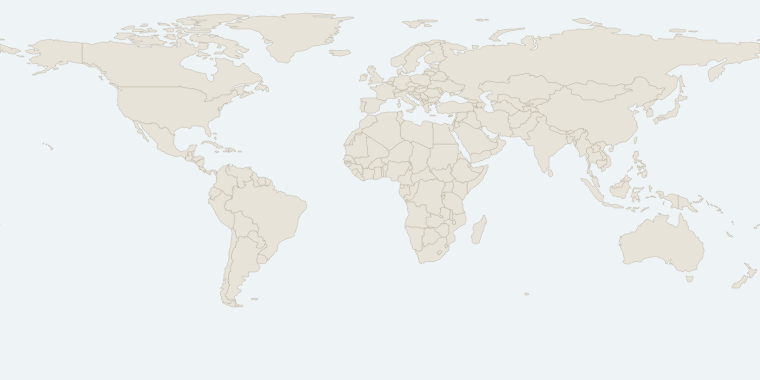
Recorded observations are not equivalent to true biological range. Absence of records does not demonstrate absence of a species.
Occurrence provenance & map methods
- Licence / retrieval date
- CC BY-NC 4.0 / 2026-09-15
- Coordinate uncertainty
- Reported for 1 of 2 plotted records. Median 113 km; 0 records at 30 m or finer; coarsest 113 km. Points are plotted at source precision, so precision varies by orders of magnitude within this map.
- Sensitive records
- unreviewed
- Countries with georeferenced records
- ES (1) · MX (1)
Points are plotted at source precision on an equirectangular projection. Two records falling on the same rendered pixel appear as one mark; the downloadable dataset is not reduced. Records published under names this reference has not reconciled, including synonyms, infraspecific taxa and sequence clusters, are excluded rather than reassigned.
05Chemistry
Measurements belong to studies, specimens and methods. A single concentration cannot stand in for a species.
| Study / year | Material | Method | Record |
|---|---|---|---|
| No verified assay records entered. This does not establish that no published assays exist. | |||
Fields retained in each future assay record
Study, publication year, specimen, material, sample size, provenance, analytical method, preparation, storage, psilocybin, psilocin, baeocystin, norbaeocystin, aeruginascin, units, qualifiers and methodological notes. No concentrations have been invented for this prototype.
Modern quantitative assays
Modern analytical studies have not yet been systematically searched and checked for this account.
Evidence assessment
Chemical literature has not yet been reviewed for this account. No assay values are extracted; this does not establish the presence or absence of any compound.
Assessments depend on material, preparation, storage, sampling and analytical methods. Measurements are literature records, not predictions of effects.
How chemistry records are structured ↗06Molecular evidence
Table 2 lists Ps-92, R. Fernández-Sasia s.n. (XAL), dated 15 January 2005, with ITS KC669289 and rpb1 KC669350. Its printed LSU accession, KC699323, instead identifies a fly mitochondrial 16S sequence in the archive. ENA accession KC669323 identifies a hispanica LSU record with matching voucher, isolate 92, date and paper citation; that correspondence supports the editorial accession correction. The paper lists Spain, whereas the three fungal archive records list Mexico, so the collection country remains unresolved. These are metadata checks, not a sequence reanalysis or data from the 1995 holotype. [ramirez-cruz-2013-phylogeny] [ena-kc699323-2026] [ena-kc669323-2026] [ena-kc669289-2026] [ena-kc669350-2026]
07History
The original name is cited as Guzmán, Documents Mycologiques 29(116):42 (2000). The 2013 revision re-examined the XAL holotype and added microscopic observations. The original protologue has not been inspected here. [index-fungorum-464625-2026] [ramirez-cruz-2013-types]
A place for the historical record
This account records the nomenclatural history checked so far. Broader historical research remains pending; interpretations must stay connected to their documentary sources.
08Conservation
Conservation assessments have not yet been researched for this account.
- Assessment status
- Not yet researched
- Assessment authority / year
- Not verified / Not verified
Not researched by Psilocybia, not assessed by a conservation authority, and Least Concern are different states. None should be inferred from another.
09Images & specimens
Space is reserved for field photographs, herbarium specimens, microscopy and historical plates, with source and licence metadata.
Photographs are not presented as sufficient for mushroom identification.
10References
- European Nucleotide Archive / INSDC (2013). European Nucleotide Archive: KC669289.1, Psilocybe hispanica, isolate 92, R. Fernandez-Sasia s.n. (XAL). . Source record ↗
Source class: primary.
Source verification history
- metadata: verified · 2026-09-12 · Psilocybia editorial. Verification source
Read accession/version, record dates, organism and marker description, source qualifiers, voucher, collection date and associated publication. Metadata inspection only; no sequence alignment or reanalysis. Year is the archive creation year.
- content: verified · 2026-09-12 · Psilocybia editorial. Verification source
Read accession/version, record dates, organism and marker description, source qualifiers, voucher, collection date and associated publication. Metadata inspection only; no sequence alignment or reanalysis. Year is the archive creation year.
- metadata: verified · 2026-09-12 · Psilocybia editorial. Verification source
- European Nucleotide Archive / INSDC (2013). European Nucleotide Archive: KC669323.1, Psilocybe hispanica, isolate 92, R. Fernandez-Sasia s.n. (XAL). . Source record ↗
Source class: primary.
Source verification history
- metadata: verified · 2026-09-12 · Psilocybia editorial. Verification source
Read accession/version, record dates, organism and marker description, source qualifiers, voucher, collection date and associated publication. Metadata inspection only; no sequence alignment or reanalysis. Year is the archive creation year.
- content: verified · 2026-09-12 · Psilocybia editorial. Verification source
Read accession/version, record dates, organism and marker description, source qualifiers, voucher, collection date and associated publication. Metadata inspection only; no sequence alignment or reanalysis. Year is the archive creation year.
- metadata: verified · 2026-09-12 · Psilocybia editorial. Verification source
- European Nucleotide Archive / INSDC (2013). European Nucleotide Archive: KC669350.1, Psilocybe hispanica, isolate 92, R. Fernandez-Sasia s.n. (XAL). . Source record ↗
Source class: primary.
Source verification history
- metadata: verified · 2026-09-12 · Psilocybia editorial. Verification source
Read accession/version, record dates, organism and marker description, source qualifiers, voucher, collection date and associated publication. Metadata inspection only; no sequence alignment or reanalysis. Year is the archive creation year.
- content: verified · 2026-09-12 · Psilocybia editorial. Verification source
Read accession/version, record dates, organism and marker description, source qualifiers, voucher, collection date and associated publication. Metadata inspection only; no sequence alignment or reanalysis. Year is the archive creation year.
- metadata: verified · 2026-09-12 · Psilocybia editorial. Verification source
- European Nucleotide Archive / INSDC (2015). European Nucleotide Archive: KC699323.1, Atelestus pulicarius mitochondrial 16S record. . Source record ↗
Source class: primary.
Source verification history
- metadata: verified · 2026-09-12 · Psilocybia editorial. Verification source
Read accession/version, record dates, organism and marker description, source qualifiers, voucher, collection date and associated publication. Metadata inspection only; no sequence alignment or reanalysis. Year is the archive creation year.
- content: verified · 2026-09-12 · Psilocybia editorial. Verification source
Read accession/version, record dates, organism and marker description, source qualifiers, voucher, collection date and associated publication. Metadata inspection only; no sequence alignment or reanalysis. Year is the archive creation year.
- metadata: verified · 2026-09-12 · Psilocybia editorial. Verification source
- GBIF Secretariat (2026). Psilocybe hispanica — GBIF Backbone Taxonomy record 5459566; accessed 29 September 2026. . Source record ↗
Source class: taxonomic database.
Source verification history
- metadata: verified · 2026-09-29 · Psilocybia editorial. Verification source
Backbone name record retrieved and confirmed by two independent routes: the strict name-match endpoint returned usageKey 5459566 as an EXACT, ACCEPTED species match, and the record endpoint was then fetched directly and agreed on name, rank and acceptance. The record places Psilocybe in Hymenogastraceae; that placement is not adopted here.
- content: verified · 2026-09-29 · Psilocybia editorial. Verification source
Backbone name record retrieved and confirmed by two independent routes: the strict name-match endpoint returned usageKey 5459566 as an EXACT, ACCEPTED species match, and the record endpoint was then fetched directly and agreed on name, rank and acceptance. The record places Psilocybe in Hymenogastraceae; that placement is not adopted here.
- metadata: verified · 2026-09-29 · Psilocybia editorial. Verification source
- GBIF.org (2026). GBIF Occurrence Download: georeferenced records for Psilocybe taxa (download 0000371-260915150036944). . DOI: 10.15468/dl.dhgzxa Source record ↗
Source class: primary.
Source verification history
- metadata: verified · 2026-09-29 · Psilocybia editorial. Verification source
Download record retrieved from the GBIF API. Key 0000371-260915150036944, DOI 10.15468/dl.dhgzxa, status SUCCEEDED, created 2026-09-15, 31,439 records drawn from 294 datasets, SIMPLE_CSV format, licence http://creativecommons.org/licenses/by-nc/4.0/legalcode. The DOI and the record count were confirmed against the archive held locally rather than assumed from the filename.
- doi: verified · 2026-09-29 · Psilocybia editorial. Verification source
DOI read from the download record returned by the GBIF API and matched to the download key of the archive used to generate the occurrence maps.
- content: verified · 2026-09-29 · Psilocybia editorial. Verification source
The archive was read row by row to generate the published maps and the per-country counts. 31,208 rows carry usable coordinates and a taxonKey this reference maps to one of its own records; 231 rows fall under synonyms, infraspecific taxa or sequence clusters and are excluded rather than reassigned. Coordinate uncertainty is reported for about 90 per cent of rows, with a median near 7 km and a coarsest value above 5,000 km, so individual points vary enormously in precision. 25 per cent of the country entries derived from this download rest on a single record, and the majority of records are human observations rather than preserved specimens; counts are therefore published alongside every country.
- metadata: verified · 2026-09-29 · Psilocybia editorial. Verification source
- Gastón Guzmán (2012). New taxonomical and ethnomycological observations on Psilocybe s.s. (Fungi, Basidiomycota, Agaricomycetidae, Agaricales, Strophariaceae) from Mexico, Africa and Spain. Acta Botanica Mexicana (100), 79-106. DOI: 10.21829/abm100.2012.32 Source record ↗
Source class: primary.
Source verification history
- metadata: verified · 2026-09-11 · Psilocybia editorial. Verification source
The PDF gives the English title, author, issue 100, pages 79–106 and year 2012. Crossref supplies a Spanish title and an online date in 2022; the account retains the printed 2012 publication year, without treating the repository date as the taxonomic date.
- content: verified · 2026-09-11 · Psilocybia editorial. Verification source
Read the emended treatment on pp. 84–86 and its preceding discussion. Visually checked PDF pp. 84–85 for type, name year, morphology and units. Archaeological species identifications are not adopted.
- doi: verified · 2026-09-11 · Psilocybia editorial. Verification source
DOI, authors, journal and pagination cross-checked against the paper and Crossref.
- metadata: verified · 2026-09-11 · Psilocybia editorial. Verification source
- iNaturalist (2026). Psilocybe hispanica — iNaturalist taxon 519040; accessed 29 September 2026. . Source record ↗
Source class: taxonomic database.
Source verification history
- metadata: verified · 2026-09-29 · Psilocybia editorial. Verification source
Taxon record retrieved and confirmed by two independent routes: a name query returned exactly one active species taxon named Psilocybe hispanica with id 519040, and the record endpoint was then fetched directly and agreed on name, rank and active status. This is an identifier for a community observation platform, not a taxonomic authority.
- content: verified · 2026-09-29 · Psilocybia editorial. Verification source
Taxon record retrieved and confirmed by two independent routes: a name query returned exactly one active species taxon named Psilocybe hispanica with id 519040, and the record endpoint was then fetched directly and agreed on name, rank and active status. This is an identifier for a community observation platform, not a taxonomic authority.
- metadata: verified · 2026-09-29 · Psilocybia editorial. Verification source
- Index Fungorum (2026). Psilocybe hispanica, name record 464625 — accessed 12 September 2026. . Source record ↗
Source class: taxonomic database.
Source verification history
- metadata: verified · 2026-09-12 · Psilocybia editorial. Verification source
Provider, record identity and displayed nomenclatural citation checked. Retrieval year is not the name publication year.
- content: verified · 2026-09-12 · Psilocybia editorial. Verification source
Read name, author, year, citation, current name, registration identifier and habitat. Database typification credits Ott & Seral-Bozal; the 2013 revision lists I. Seral-Bozal alone. Preserve the attributions separately.
- metadata: verified · 2026-09-12 · Psilocybia editorial. Verification source
- T. Niskanen; B. Dentinger; A.M. Ainsworth; I. Kytövuori; J.T. Kim; G.W. Griffith; K. Liimatainen (2026). Re-shaping the family-level classification of Agaricineae (Agaricales, Basidiomycota) using a phylogenomic approach. Studies in Mycology 113(1), 115–134. DOI: 10.3114/sim.2026.113.03 Source record ↗
Source class: primary.
Source verification history
- metadata: verified · 2026-09-10 · Psilocybia editorial. Verification source
Bibliographic identity inspected; publication year is distinct from retrieval date.
- content: verified · 2026-09-10 · Psilocybia editorial. Verification source
Family treatment Agrocybaceae, Table 1 and classification discussion inspected in the PDF. Effective online date in paper: 1 April 2026; Crossref issue date differs, so the record retains year only.
- doi: verified · 2026-09-10 · Psilocybia editorial. Verification source
DOI and title matched against the cited bibliographic record; not just resolver availability.
- metadata: verified · 2026-09-10 · Psilocybia editorial. Verification source
- Virginia Ramírez-Cruz; Gastón Guzmán; Alma Rosa Villalobos-Arámbula; Aarón Rodríguez; P. Brandon Matheny; Marisol Sánchez-García; Laura Guzmán-Dávalos (2013). Phylogenetic inference and trait evolution of the psychedelic mushroom genus Psilocybe sensu lato (Agaricales). Botany 91(9), 573-591. DOI: 10.1139/cjb-2013-0070 Source record ↗
Source class: primary.
Source verification history
- metadata: verified · 2026-09-11 · Psilocybia editorial. Verification source
Authors, Botany 91(9):573–591, year 2013 and DOI match the primary PDF and Crossref.
- content: verified · 2026-09-11 · Psilocybia editorial. Verification source
Read Table 2 entries Ps-329, Ps-308 and Ps-317, Fig. 1 and the mexicanae/zapotecorum clade discussion. Marker accessions are reported from the paper; no sequence reanalysis.
- doi: verified · 2026-09-11 · Psilocybia editorial. Verification source
DOI, authors, journal and pagination cross-checked against the paper and Crossref.
- metadata: verified · 2026-09-11 · Psilocybia editorial. Verification source
- Virginia Ramírez-Cruz; Gaston Guzmán; Laura Guzmán-Dávalos (2013). Type studies of Psilocybe sensu lato (Strophariaceae, Agaricales). Sydowia 65(2), 277–319. Source record ↗
Source class: primary.
Source verification history
- metadata: verified · 2026-09-10 · Psilocybia editorial. Verification source
Bibliographic identity checked against the publication.
- content: verified · 2026-09-10 · Psilocybia editorial. Verification source
Full PDF inspected, with goniospora pp. 291–292 and ovoideocystidiata pp. 302–303 read in detail. No numeric microdimensions transcribed because extracted unit glyphs are unreliable. Qualitative cystidial observations and the type voucher are used.
- metadata: verified · 2026-09-10 · Psilocybia editorial. Verification source
Claim provenance
Source checks record what was inspected. Publication approval and section review are separate editorial decisions.
The name and nomenclatural citation agree between the inspected database record and the type revision.
Fields: taxonomy.canonical_name, taxonomy.accepted_name, taxonomy.genus, taxonomy.specific_epithet, taxonomy.authority, taxonomy.publication_year, taxonomy.index_fungorum_id
- index-fungorum-464625-2026 — Name heading and original publication citation
Source checked · Accessed 2026-09-12 · Psilocybia editorial. Scoped source passage inspected by the Psilocybia editorial process.
- ramirez-cruz-2013-types — p. 292, hispanica
Source checked · Accessed 2026-09-12 · Psilocybia editorial. Scoped source passage inspected by the Psilocybia editorial process.
Retain the species following the inspected type treatment, corroborated by current database acceptance; this is a scoped editorial decision, not a genus-wide reconciliation.
Fields: taxonomy.status
- ramirez-cruz-2013-types — p. 292, hispanica
Source checked · Accessed 2026-09-12 · Psilocybia editorial. Scoped source passage inspected by the Psilocybia editorial process.
- index-fungorum-464625-2026 — Accepted/current name
Source checked · Accessed 2026-09-12 · Psilocybia editorial. Scoped source passage inspected by the Psilocybia editorial process.
Adopt Agrocybaceae following the 2026 phylogenomic family treatment, which explicitly includes Psilocybe.
Fields: taxonomy.family
- niskanen-2026 — p. 119, Agrocybaceae: currently included genera
Source checked · Accessed 2026-09-12 · Psilocybia editorial. Scoped source passage inspected by the Psilocybia editorial process.
This account links the Spanish holotype revision to a separate collection included in a multigene study. It preserves source disagreements about microscopic structure, type-collector attribution and sequence metadata.
Fields: overview.text
- ramirez-cruz-2013-types — p. 292
Source checked · Accessed 2026-09-12 · Psilocybia editorial. Scoped source passage inspected by the Psilocybia editorial process.
- ramirez-cruz-2013-phylogeny — Table 2, Ps-92
Source checked · Accessed 2026-09-12 · Psilocybia editorial. Scoped source passage inspected by the Psilocybia editorial process.
- index-fungorum-464625-2026 — Typification Details
Source checked · Accessed 2026-09-12 · Psilocybia editorial. Archive/source metadata checked; no sequence reanalysis or independently checked author corrigendum.
- ena-kc669323-2026 — FT source metadata
Source checked · Accessed 2026-09-12 · Psilocybia editorial. Archive/source metadata checked; no sequence reanalysis or independently checked author corrigendum.
The holotype revision reports spores of 13.6–14.4(15.2) × 6.4–8.0(8.8) µm and caulocystidia in the upper stipe. It describes the pileus trama as interwoven in the character list but as radial in the remarks. No single trama arrangement is adopted here. These selected observations do not replace a complete description.
Fields: description.microscopic.text
- ramirez-cruz-2013-types — p. 292, character list and remarks; PDF page image checked for µm
Source checked · Accessed 2026-09-12 · Psilocybia editorial. Scoped source passage inspected by the Psilocybia editorial process.
The character list describes the pileus trama as interwoven.
Fields: description.microscopic.text
- ramirez-cruz-2013-types — p. 292, Pileus trama sentence
Source checked · Accessed 2026-09-12 · Psilocybia editorial. Scoped source passage inspected by the Psilocybia editorial process.
The remarks refer to a radial arrangement of the pileus trama.
Fields: description.microscopic.text
- ramirez-cruz-2013-types — p. 292, final sentence of Remarks
Source checked · Accessed 2026-09-12 · Psilocybia editorial. Scoped source passage inspected by the Psilocybia editorial process.
The type revision records the examined material from dung in an alpine meadow at 2,300 m. The Index Fungorum record specifies horse dung. These are source descriptions of the type habitat, not a complete ecological survey.
Fields: ecology.narrative.text
- ramirez-cruz-2013-types — p. 292, Material examined
Source checked · Accessed 2026-09-12 · Psilocybia editorial. Scoped source passage inspected by the Psilocybia editorial process.
- index-fungorum-464625-2026 — Host-Substratum/Locality
Source checked · Accessed 2026-09-12 · Psilocybia editorial. Scoped source passage inspected by the Psilocybia editorial process.
The examined holotype is listed from the Pyrenees north of Huesca, Spain, collected in autumn 1995 and deposited at XAL. The revision credits I. Seral-Bozal s.n.; Index Fungorum credits Ott & Seral-Bozal, 1995. Collector attribution therefore remains unresolved. Neither record establishes the complete range.
Fields: distribution.narrative.text
- ramirez-cruz-2013-types — p. 292, Material examined
Source checked · Accessed 2026-09-12 · Psilocybia editorial. Scoped source passage inspected by the Psilocybia editorial process.
- index-fungorum-464625-2026 — Typification Details
Source checked · Accessed 2026-09-12 · Psilocybia editorial. Scoped source passage inspected by the Psilocybia editorial process.
The type revision lists I. Seral-Bozal s.n., autumn 1995, XAL holotype.
Fields: distribution.narrative.text
- ramirez-cruz-2013-types — p. 292, Material examined
Source checked · Accessed 2026-09-12 · Psilocybia editorial. Scoped source passage inspected by the Psilocybia editorial process.
Index Fungorum lists the holotype as XAL, Ott & Seral-Bozal, 1995.
Fields: distribution.narrative.text
- index-fungorum-464625-2026 — Typification Details
Source checked · Accessed 2026-09-12 · Psilocybia editorial. Scoped source passage inspected by the Psilocybia editorial process.
Table 2 lists Ps-92, R. Fernández-Sasia s.n. (XAL), dated 15 January 2005, with ITS KC669289 and rpb1 KC669350. Its printed LSU accession, KC699323, instead identifies a fly mitochondrial 16S sequence in the archive. ENA accession KC669323 identifies a hispanica LSU record with matching voucher, isolate 92, date and paper citation; that correspondence supports the editorial accession correction. The paper lists Spain, whereas the three fungal archive records list Mexico, so the collection country remains unresolved. These are metadata checks, not a sequence reanalysis or data from the 1995 holotype.
Fields: molecular.text
- ramirez-cruz-2013-phylogeny — Table 2, p. 578, Ps-92 row
Source checked · Accessed 2026-09-12 · Psilocybia editorial. Archive/source metadata checked; no sequence reanalysis or independently checked author corrigendum.
- ena-kc699323-2026 — DE and OS: Atelestus pulicarius, mitochondrial 16S
Source checked · Accessed 2026-09-12 · Psilocybia editorial. Archive/source metadata checked; no sequence reanalysis or independently checked author corrigendum.
- ena-kc669323-2026 — DE, RN and FT source: LSU, voucher, isolate 92, date and country
Source checked · Accessed 2026-09-12 · Psilocybia editorial. Archive/source metadata checked; no sequence reanalysis or independently checked author corrigendum.
- ena-kc669289-2026 — DE and FT source: ITS, voucher, isolate 92, date and country
Source checked · Accessed 2026-09-12 · Psilocybia editorial. Archive/source metadata checked; no sequence reanalysis or independently checked author corrigendum.
- ena-kc669350-2026 — DE and FT source: rpb1, voucher, isolate 92, date and country
Source checked · Accessed 2026-09-12 · Psilocybia editorial. Archive/source metadata checked; no sequence reanalysis or independently checked author corrigendum.
The original name is cited as Guzmán, Documents Mycologiques 29(116):42 (2000). The 2013 revision re-examined the XAL holotype and added microscopic observations. The original protologue has not been inspected here.
Fields: history.text
- index-fungorum-464625-2026 — Name heading
Source checked · Accessed 2026-09-12 · Psilocybia editorial. Scoped source passage inspected by the Psilocybia editorial process.
- ramirez-cruz-2013-types — p. 292, heading and remarks
Source checked · Accessed 2026-09-12 · Psilocybia editorial. Scoped source passage inspected by the Psilocybia editorial process.
Table 2 prints KC699323 in the hispanica LSU column.
Fields: molecular.text
- ramirez-cruz-2013-phylogeny — Table 2, p. 578, Ps-92 LSU column
Source checked · Accessed 2026-09-12 · Psilocybia editorial. Archive/source metadata checked; no sequence reanalysis or independently checked author corrigendum.
KC699323 is a fly mitochondrial sequence; KC669323 is a hispanica LSU record matching the paper, isolate, voucher and collection date.
Fields: molecular.text
- ena-kc699323-2026 — DE and OS: Atelestus pulicarius, mitochondrial 16S
Source checked · Accessed 2026-09-12 · Psilocybia editorial. Archive/source metadata checked; no sequence reanalysis or independently checked author corrigendum.
- ena-kc669323-2026 — DE, RN and FT source: LSU, voucher, isolate 92, date and country
Source checked · Accessed 2026-09-12 · Psilocybia editorial. Archive/source metadata checked; no sequence reanalysis or independently checked author corrigendum.
Table 2 assigns the Ps-92 collection to Spain.
Fields: molecular.text
- ramirez-cruz-2013-phylogeny — Table 2, p. 578, Ps-92 Country column
Source checked · Accessed 2026-09-12 · Psilocybia editorial. Archive/source metadata checked; no sequence reanalysis or independently checked author corrigendum.
All three matching fungal records have country="Mexico".
Fields: molecular.text
- ena-kc669323-2026 — FT source /country, /specimen_voucher, /isolate and /collection_date
Source checked · Accessed 2026-09-12 · Psilocybia editorial. Archive/source metadata checked; no sequence reanalysis or independently checked author corrigendum.
- ena-kc669289-2026 — FT source /country, /specimen_voucher, /isolate and /collection_date
Source checked · Accessed 2026-09-12 · Psilocybia editorial. Archive/source metadata checked; no sequence reanalysis or independently checked author corrigendum.
- ena-kc669350-2026 — FT source /country, /specimen_voucher, /isolate and /collection_date
Source checked · Accessed 2026-09-12 · Psilocybia editorial. Archive/source metadata checked; no sequence reanalysis or independently checked author corrigendum.
2 georeferenced records for this name in the cited GBIF download, plotted as 2 distinct positions and spanning 2 country codes, of which 2 rest on a single record. These are record locations, not a compiled range: no range has been researched for this account.
Fields: distribution.occurrence
- gbif-download-dhgzxa-2026 — Download 0000371-260915150036944; rows matched on taxonKey
Source checked · Accessed 2026-09-15 · Psilocybia editorial. Archive read row by row to generate the published map and the per-country counts. Rows under synonyms, infraspecific taxa and sequence clusters are excluded rather than reassigned.
Database identifiers for this species, recorded so a reader can retrieve the same records. The GBIF backbone still places Psilocybe in Hymenogastraceae, whereas this site follows the 2026 family revision and treats the genus in Agrocybaceae; citing the identifier is not an endorsement of that placement.
Fields: distribution.gbif_taxon_id, distribution.inaturalist_taxon_id
- gbif-5459566-2026 — Backbone taxon record 5459566
Source checked · Accessed 2026-09-29 · Psilocybia editorial. Identifier confirmed against the backbone record by two endpoints.
- inaturalist-519040-2026 — Taxon record 519040
Source checked · Accessed 2026-09-29 · Psilocybia editorial. Identifier confirmed against the taxon record by two endpoints.
Habitat and substrate of the holotype as recorded in the type study. Guzman (2012) separately characterises the species as fimicolous and notes its altitudinal range.
Fields: ecology.habitats, ecology.substrates
- ramirez-cruz-2013-types — Habitat, ecology and distribution statements
Source checked · Accessed 2026-09-29 · Psilocybia editorial. Read directly in the cited text; the passage was anchored to this species entry.
- guzman-2012-zapotecorum — Habitat, ecology and distribution statements
Source checked · Accessed 2026-09-29 · Psilocybia editorial. Read directly in the cited text; the passage was anchored to this species entry.
Country of the holotype as recorded in the type study. No range statement was located, so the known range is left unresearched.
Fields: distribution.countries
- ramirez-cruz-2013-types — Habitat, ecology and distribution statements
Source checked · Accessed 2026-09-29 · Psilocybia editorial. Read directly in the cited text; the passage was anchored to this species entry.
Conflicting evidence
Two passages on the same page give different arrangements. Both assertions are retained; no author correction has been checked.
The consulted records differ in the collector attribution. The original label and protologue have not been inspected; both attributions are retained.
The printed accession points to a different organism and marker.
Use KC669323 as the archive accession for the matching hispanica LSU record, based on agreement of voucher, isolate 92, collection date and cited paper. This mapping is an explicit editorial inference, not an author-confirmed corrigendum. Retain the printed KC699323 assertion and the unresolved country discrepancy. — Psilocybia editorial, 2026-09-12
The paper and archive disagree on the country of the separate 2005 collection. Preserve both; no locality is adopted without further specimen or author documentation.