01Overview
This scoped account documents selected morphology and collection context from checked sources. It is not a comprehensive species monograph. [ramirez-cruz-2013-types]
This is a scientific reference record, not field-identification guidance.

Psilocybe mescaleroensis
New Mexico, USA · 2016-08-31
Source identification: Psilocybe mescaleroensis. Mushroom Observer observation 260056; not the type collection.
Photograph: Alan Rockefeller · Source · CC BY-SA 4.0
Resized and re-encoded; full composition retained.
02Nomenclature
- Accepted name
- Psilocybe mescaleroensis
- Authority
- Guzmán, Walstad, E. Gándara & Ram.-Guill.
- Family
- Agrocybaceae
- Publication year
- 2007
- Basionym
- Not yet researched — verification required
- Taxonomic status
- accepted
- MycoBank identifier
- Not yet researched — verification required
- Index Fungorum identifier
- Not yet researched — verification required
Synonyms (0 recorded names)
No verified synonyms entered. This does not indicate that synonyms do not exist.
Nomenclatural sources: [gbif-5459263-2026] [ramirez-cruz-2013-types] [niskanen-2026]
Research completeness
- taxonomy
- Human reviewed — J Dale, 2026-09-29
Name and type treatment checked; exhaustive synonymy remains pending. Family classification explicitly reconciled.
- overview
- preliminary
Selected passages checked; coverage is incomplete.
- description
- disputed
Selected measurements and µm units checked against PDF page images; broader description coverage remains incomplete. Conflicting pleurocystidial observations retained without a synthetic diagnosis.
- ecology
- preliminary
Selected passages checked; coverage is incomplete.
- distribution
- disputed
Both type-provenance assertions checked and retained; discrepancy remains open.
- chemistry
- not researched
Not researched for this account; no absence claim.
- molecular
- not researched
Not researched for this account; no absence claim.
- history
- preliminary
Selected passages checked; coverage is incomplete.
- conservation
- not researched
Not researched for this account; no absence claim.
03Taxonomic description
Taxonomic description. These characters are presented for scientific reference and are not intended as field-identification guidance.
Macroscopic characters
The original description gives a cap diameter of (20–)30–45(–60) mm and describes a convex to slightly umbonate cap with a frequently wavy margin and a short-lived, slightly membranous ring. These are selected observations from the protologue. [guzman-2007-mescaleroensis]
Microscopic characters
The 2013 revision reports spores 9.6–11.2(12.0) × (5.6)6.4–7.2 µm and sparse pleurocystidia. The original description explicitly reports pleurocystidia absent and describes subrhomboid or subovoid spores, whereas the revision describes ellipsoid, elongate and fusiform spores. The accounts are retained as differing observations rather than combined into a single diagnosis. [ramirez-cruz-2013-types] [guzman-2007-mescaleroensis]
04Distribution and ecology
The original paper lists Walstad s.n., July 2004, near Mescalero in Sierra Blanca, Mescalero Range, Lincoln County, New Mexico (XAL holotype; NY isotype). The 2013 revision instead lists Sacramento, New Mexico, August 2007, L. F. Walstad s.n. (XAL holotype). The locality and date discrepancy remains unresolved; neither account establishes a complete range. [guzman-2007-mescaleroensis] [ramirez-cruz-2013-types]
- Known range
- Sierra Blanca, Lincoln County, New Mexico, USA, reported in the protologue as known only from the type locality
- Countries with documented material
- United States
- Habitats
- Grassland near Pinus ponderosa forest
- Substrates
- Rich soil, Decaying grasses
- Ecological associations
- Pinus ponderosa, Gopher burrows
- Seasonality
- Observed in summer and autumn.
Ecological context
The original paper reports fruiting on rich soil or decaying grasses in grassland near Pinus ponderosa forest, with observations in summer and autumn. These statements describe the material covered by that paper. [guzman-2007-mescaleroensis]
Occurrence records
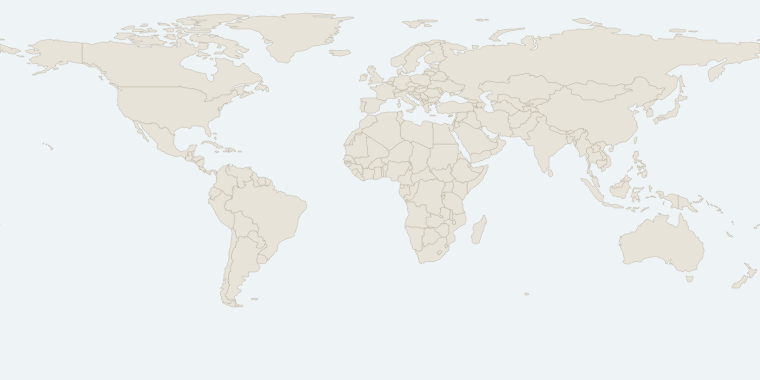
Recorded observations are not equivalent to true biological range. Absence of records does not demonstrate absence of a species.
Occurrence provenance & map methods
- Licence / retrieval date
- CC BY-NC 4.0 / 2026-09-15
- Coordinate uncertainty
- Reported for 7 of 10 plotted records. Median 3 km; 0 records at 30 m or finer; coarsest 423 km. Points are plotted at source precision, so precision varies by orders of magnitude within this map.
- Sensitive records
- unreviewed
- Countries with georeferenced records
- US (10)
Points are plotted at source precision on an equirectangular projection. Two records falling on the same rendered pixel appear as one mark; the downloadable dataset is not reduced. Records published under names this reference has not reconciled, including synonyms, infraspecific taxa and sequence clusters, are excluded rather than reassigned.
05Chemistry
Measurements belong to studies, specimens and methods. A single concentration cannot stand in for a species.
| Study / year | Material | Method | Record |
|---|---|---|---|
| No verified assay records entered. This does not establish that no published assays exist. | |||
Fields retained in each future assay record
Study, publication year, specimen, material, sample size, provenance, analytical method, preparation, storage, psilocybin, psilocin, baeocystin, norbaeocystin, aeruginascin, units, qualifiers and methodological notes. No concentrations have been invented for this prototype.
Modern quantitative assays
Modern analytical studies have not yet been systematically searched and checked for this account.
Evidence assessment
Chemical literature has not yet been reviewed for this account. No assay values are extracted; this does not establish compound presence or absence.
Assessments depend on material, preparation, storage, sampling and analytical methods. Measurements are literature records, not predictions of effects.
How chemistry records are structured ↗06Molecular evidence
This section has not yet been researched for this account.
07History
Guzmán and colleagues described the species in Mycotaxon 99:223–226 (2007), with the name on p. 225. Their placement in section Stuntzii was questioned by the 2013 type revision, which compared it with Semilanceatae or Cyanescens. No sectional assignment is adopted here. [guzman-2007-mescaleroensis] [ramirez-cruz-2013-types]
A place for the historical record
This account records the nomenclatural history checked so far. Broader historical research remains pending; interpretations must stay connected to their documentary sources.
08Conservation
Conservation assessments have not yet been researched for this account.
- Assessment status
- Not yet researched
- Assessment authority / year
- Not verified / Not verified
Not researched by Psilocybia, not assessed by a conservation authority, and Least Concern are different states. None should be inferred from another.
09Images & specimens
The opening photograph is Figure 01. Its caption records the source identification and attribution; it is not a type specimen unless explicitly stated.
Photographs are not presented as sufficient for mushroom identification.
10References
- GBIF Secretariat (2026). Psilocybe mescaleroensis — GBIF Backbone Taxonomy record 5459263; checked 13 September 2026. . Source record ↗
Source class: taxonomic database.
Source verification history
- metadata: verified · 2026-09-13 · Psilocybia editorial. Verification source
Cached name-record response inspected: name, authorship, publication, rank, acceptance and family. Underlying interpretation is dated 2023. No fresh retrieval or occurrence-data check claimed.
- content: verified · 2026-09-13 · Psilocybia editorial. Verification source
Cached name-record response inspected: name, authorship, publication, rank, acceptance and family. Underlying interpretation is dated 2023. No fresh retrieval or occurrence-data check claimed.
- metadata: verified · 2026-09-13 · Psilocybia editorial. Verification source
- GBIF.org (2026). GBIF Occurrence Download: georeferenced records for Psilocybe taxa (download 0000371-260915150036944). . DOI: 10.15468/dl.dhgzxa Source record ↗
Source class: primary.
Source verification history
- metadata: verified · 2026-09-29 · Psilocybia editorial. Verification source
Download record retrieved from the GBIF API. Key 0000371-260915150036944, DOI 10.15468/dl.dhgzxa, status SUCCEEDED, created 2026-09-15, 31,439 records drawn from 294 datasets, SIMPLE_CSV format, licence http://creativecommons.org/licenses/by-nc/4.0/legalcode. The DOI and the record count were confirmed against the archive held locally rather than assumed from the filename.
- doi: verified · 2026-09-29 · Psilocybia editorial. Verification source
DOI read from the download record returned by the GBIF API and matched to the download key of the archive used to generate the occurrence maps.
- content: verified · 2026-09-29 · Psilocybia editorial. Verification source
The archive was read row by row to generate the published maps and the per-country counts. 31,208 rows carry usable coordinates and a taxonKey this reference maps to one of its own records; 231 rows fall under synonyms, infraspecific taxa or sequence clusters and are excluded rather than reassigned. Coordinate uncertainty is reported for about 90 per cent of rows, with a median near 7 km and a coarsest value above 5,000 km, so individual points vary enormously in precision. 25 per cent of the country entries derived from this download rest on a single record, and the majority of records are human observations rather than preserved specimens; counts are therefore published alongside every country.
- metadata: verified · 2026-09-29 · Psilocybia editorial. Verification source
- Gastón Guzmán; Lee Walstad; Etelvina Gándara; Florencia Ramírez-Guillén (2007). A new bluing species of Psilocybe, section Stuntzii, from New Mexico, U.S.A.. Mycotaxon 99, 223–226. DOI: 10.5962/p.419180 Source record ↗
Source class: primary.
Source verification history
- metadata: verified · 2026-09-13 · Psilocybia editorial. Verification source
Cached full paper inspected, including title page and pp. 225–226. Title, authors, year, volume and pages agree with the cached Crossref DOI record. Fresh DOI web opening failed; verification uses cached bibliographic response. No chemical assay is extracted.
- content: verified · 2026-09-13 · Psilocybia editorial. Verification source
Cached full paper inspected, including title page and pp. 225–226. Title, authors, year, volume and pages agree with the cached Crossref DOI record. Fresh DOI web opening failed; verification uses cached bibliographic response. No chemical assay is extracted.
- doi: verified · 2026-09-13 · Psilocybia editorial. Verification source
Cached full paper inspected, including title page and pp. 225–226. Title, authors, year, volume and pages agree with the cached Crossref DOI record. Fresh DOI web opening failed; verification uses cached bibliographic response. No chemical assay is extracted.
- metadata: verified · 2026-09-13 · Psilocybia editorial. Verification source
- iNaturalist (2026). Psilocybe mescaleroensis — iNaturalist taxon 518961; accessed 29 September 2026. . Source record ↗
Source class: taxonomic database.
Source verification history
- metadata: verified · 2026-09-29 · Psilocybia editorial. Verification source
Taxon record retrieved and confirmed by two independent routes: a name query returned exactly one active species taxon named Psilocybe mescaleroensis with id 518961, and the record endpoint was then fetched directly and agreed on name, rank and active status. This is an identifier for a community observation platform, not a taxonomic authority.
- content: verified · 2026-09-29 · Psilocybia editorial. Verification source
Taxon record retrieved and confirmed by two independent routes: a name query returned exactly one active species taxon named Psilocybe mescaleroensis with id 518961, and the record endpoint was then fetched directly and agreed on name, rank and active status. This is an identifier for a community observation platform, not a taxonomic authority.
- metadata: verified · 2026-09-29 · Psilocybia editorial. Verification source
- T. Niskanen; B. Dentinger; A.M. Ainsworth; I. Kytövuori; J.T. Kim; G.W. Griffith; K. Liimatainen (2026). Re-shaping the family-level classification of Agaricineae (Agaricales, Basidiomycota) using a phylogenomic approach. Studies in Mycology 113(1), 115–134. DOI: 10.3114/sim.2026.113.03 Source record ↗
Source class: primary.
Source verification history
- metadata: verified · 2026-09-10 · Psilocybia editorial. Verification source
Bibliographic identity inspected; publication year is distinct from retrieval date.
- content: verified · 2026-09-10 · Psilocybia editorial. Verification source
Family treatment Agrocybaceae, Table 1 and classification discussion inspected in the PDF. Effective online date in paper: 1 April 2026; Crossref issue date differs, so the record retains year only.
- doi: verified · 2026-09-10 · Psilocybia editorial. Verification source
DOI and title matched against the cited bibliographic record; not just resolver availability.
- metadata: verified · 2026-09-10 · Psilocybia editorial. Verification source
- Virginia Ramírez-Cruz; Gaston Guzmán; Laura Guzmán-Dávalos (2013). Type studies of Psilocybe sensu lato (Strophariaceae, Agaricales). Sydowia 65(2), 277–319. Source record ↗
Source class: primary.
Source verification history
- metadata: verified · 2026-09-10 · Psilocybia editorial. Verification source
Bibliographic identity checked against the publication.
- content: verified · 2026-09-10 · Psilocybia editorial. Verification source
Full PDF inspected, with goniospora pp. 291–292 and ovoideocystidiata pp. 302–303 read in detail. No numeric microdimensions transcribed because extracted unit glyphs are unreliable. Qualitative cystidial observations and the type voucher are used.
- metadata: verified · 2026-09-10 · Psilocybia editorial. Verification source
Claim provenance
Source checks record what was inspected. Publication approval and section review are separate editorial decisions.
Name and publication citation checked; authority spacing normalized.
Fields: taxonomy.canonical_name, taxonomy.accepted_name, taxonomy.genus, taxonomy.specific_epithet, taxonomy.authority, taxonomy.publication_year
- ramirez-cruz-2013-types — pp. 297–298, mescaleroensis
Source checked · Accessed 2026-09-13 · Psilocybia editorial. Scoped source passage checked.
- gbif-5459263-2026 — canonicalName, authorship, publishedIn
Source checked · Accessed 2026-09-13 · Psilocybia editorial. Scoped source passage checked.
Retain species within the primary type treatment, corroborated by GBIF. Comprehensive synonymy remains pending.
Fields: taxonomy.status
- ramirez-cruz-2013-types — pp. 297–298, mescaleroensis
Source checked · Accessed 2026-09-13 · Psilocybia editorial. Scoped source passage checked.
- gbif-5459263-2026 — taxonomicStatus and rank
Source checked · Accessed 2026-09-13 · Psilocybia editorial. Scoped source passage checked.
Follow the 2026 family treatment.
Fields: taxonomy.family
- niskanen-2026 — p. 119, Agrocybaceae, currently included genera
Source checked · Accessed 2026-09-13 · Psilocybia editorial. Scoped passage checked by the Psilocybia editorial process.
GBIF retains Hymenogastraceae.
Fields: taxonomy.family
- gbif-5459263-2026 — family; lastInterpreted is 2023
Source checked · Accessed 2026-09-13 · Psilocybia editorial. Scoped source passage checked.
This scoped account documents selected morphology and collection context from checked sources. It is not a comprehensive species monograph.
Fields: overview.text
- ramirez-cruz-2013-types — pp. 297–298, mescaleroensis
Source checked · Accessed 2026-09-13 · Psilocybia editorial. Scoped source passage checked.
The original description gives a cap diameter of (20–)30–45(–60) mm and describes a convex to slightly umbonate cap with a frequently wavy margin and a short-lived, slightly membranous ring. These are selected observations from the protologue.
Fields: description.macroscopic.text
- guzman-2007-mescaleroensis — p. 225, macroscopic description
Source checked · Accessed 2026-09-13 · Psilocybia editorial. Millimetre units and parenthesized extremes checked against the page image.
The 2013 revision reports spores 9.6–11.2(12.0) × (5.6)6.4–7.2 µm and sparse pleurocystidia. The original description explicitly reports pleurocystidia absent and describes subrhomboid or subovoid spores, whereas the revision describes ellipsoid, elongate and fusiform spores. The accounts are retained as differing observations rather than combined into a single diagnosis.
Fields: description.microscopic.text
- ramirez-cruz-2013-types — pp. 297–298, mescaleroensis
Source checked · Accessed 2026-09-13 · Psilocybia editorial. Dimensions and µm units checked against the page image. The revision says the original did not mention pleurocystidia, but the original explicitly says absent.
- guzman-2007-mescaleroensis — p. 225, microscopic description
Source checked · Accessed 2026-09-13 · Psilocybia editorial. Scoped source passage checked.
The original paper reports fruiting on rich soil or decaying grasses in grassland near Pinus ponderosa forest, with observations in summer and autumn. These statements describe the material covered by that paper.
Fields: ecology.narrative.text
- guzman-2007-mescaleroensis — p. 225, Habitat and distribution
Source checked · Accessed 2026-09-13 · Psilocybia editorial. Scoped source passage checked.
The original paper lists Walstad s.n., July 2004, near Mescalero in Sierra Blanca, Mescalero Range, Lincoln County, New Mexico (XAL holotype; NY isotype). The 2013 revision instead lists Sacramento, New Mexico, August 2007, L. F. Walstad s.n. (XAL holotype). The locality and date discrepancy remains unresolved; neither account establishes a complete range.
Fields: distribution.narrative.text
- guzman-2007-mescaleroensis — pp. 225–226, type designation and Studied Material
Source checked · Accessed 2026-09-13 · Psilocybia editorial. Scoped source passage checked.
- ramirez-cruz-2013-types — p. 297, Material examined
Source checked · Accessed 2026-09-13 · Psilocybia editorial. Scoped source passage checked.
Guzmán and colleagues described the species in Mycotaxon 99:223–226 (2007), with the name on p. 225. Their placement in section Stuntzii was questioned by the 2013 type revision, which compared it with Semilanceatae or Cyanescens. No sectional assignment is adopted here.
Fields: history.text
- guzman-2007-mescaleroensis — pp. 223, 225–226
Source checked · Accessed 2026-09-13 · Psilocybia editorial. Scoped source passage checked.
- ramirez-cruz-2013-types — pp. 297–298, Remarks
Source checked · Accessed 2026-09-13 · Psilocybia editorial. Scoped source passage checked.
Original type collection: July 2004, near Mescalero, Sierra Blanca, Lincoln County; XAL holotype and NY isotype.
Fields: distribution.narrative.text
- guzman-2007-mescaleroensis — pp. 225–226
Source checked · Accessed 2026-09-13 · Psilocybia editorial. Scoped source passage checked.
Revision type collection: August 2007, Sacramento, New Mexico; XAL holotype.
Fields: distribution.narrative.text
- ramirez-cruz-2013-types — p. 297
Source checked · Accessed 2026-09-13 · Psilocybia editorial. Scoped source passage checked.
The original explicitly reports pleurocystidia absent.
Fields: description.microscopic.text
- guzman-2007-mescaleroensis — pp. 225–226
Source checked · Accessed 2026-09-13 · Psilocybia editorial. Scoped source passage checked.
The revision observes sparse pleurocystidia and says the original did not mention them.
Fields: description.microscopic.text
- ramirez-cruz-2013-types — p. 297
Source checked · Accessed 2026-09-13 · Psilocybia editorial. Scoped source passage checked.
10 georeferenced records for this name in the cited GBIF download, plotted as 8 distinct positions and spanning 1 country codes, of which 0 rest on a single record. These are record locations, not a compiled range: no range has been researched for this account.
Fields: distribution.occurrence
- gbif-download-dhgzxa-2026 — Download 0000371-260915150036944; rows matched on taxonKey
Source checked · Accessed 2026-09-15 · Psilocybia editorial. Archive read row by row to generate the published map and the per-country counts. Rows under synonyms, infraspecific taxa and sequence clusters are excluded rather than reassigned.
Database identifiers for this species, recorded so a reader can retrieve the same records. The GBIF backbone still places Psilocybe in Hymenogastraceae, whereas this site follows the 2026 family revision and treats the genus in Agrocybaceae; citing the identifier is not an endorsement of that placement.
Fields: distribution.gbif_taxon_id, distribution.inaturalist_taxon_id
- gbif-5459263-2026 — Backbone taxon record 5459263
Source checked · Accessed 2026-09-29 · Psilocybia editorial. Identifier confirmed against the backbone record by two endpoints.
- inaturalist-518961-2026 — Taxon record 518961
Source checked · Accessed 2026-09-29 · Psilocybia editorial. Identifier confirmed against the taxon record by two endpoints.
Habitat, substrate and season as given in the protologue, which records the species as commonly associated with the holes of gophers. Pinus ponderosa is the dominant tree of the adjacent forest, not a symbiotic partner.
Fields: ecology.habitats, ecology.substrates, ecology.associations, ecology.seasonality
- guzman-2007-mescaleroensis — Habitat, ecology and distribution statements
Source checked · Accessed 2026-09-29 · Psilocybia editorial. Read directly in the cited text; the passage was anchored to this species entry.
The protologue states it is known only from the type locality. The later type study examined a second New Mexico collection, so the record is not confined to a single gathering.
Fields: distribution.regions, distribution.countries
- guzman-2007-mescaleroensis — Habitat, ecology and distribution statements
Source checked · Accessed 2026-09-29 · Psilocybia editorial. Read directly in the cited text; the passage was anchored to this species entry.
- ramirez-cruz-2013-types — Habitat, ecology and distribution statements
Source checked · Accessed 2026-09-29 · Psilocybia editorial. Read directly in the cited text; the passage was anchored to this species entry.
Conflicting evidence
GBIF retains an older family classification.
Adopt Niskanen et al. (2026), which includes Psilocybe in Agrocybaceae; use GBIF only to corroborate nomenclature and species acceptance. — Psilocybia editorial, 2026-09-13
The two papers disagree on date and locality wording for the holotype; label inspection or an author correction is needed.
Presence versus absence differs, and the revision inaccurately characterizes the original wording. Both observations remain attributed; no cause is established.